
An Intelligent City is built on tools and methodologies including the Internet, cloud computing, big data, the Internet of Things (IoT), and social networks. By leveraging cutting-edge technologies such as IoT, cloud computing, and artificial intelligence (AI), it enables information transmission, processing, and interaction to construct a city’s intelligent capabilities. The core application functions of a Smart City cover eight key areas: Intelligent Transportation System (ITS), Smart Energy System, Smart Logistics & Building Service System, Urban Command Center, Smart Healthcare, Urban Public Security, Urban Environmental Management, and Government Public Service Platform. Backed by over 20 years of systems integration experience and a professional software & hardware R&D team, our company provides robust support for realizing the digitalization, data-driven transformation, and intelligent upgrading of Smart Cities under the new infrastructure initiative.
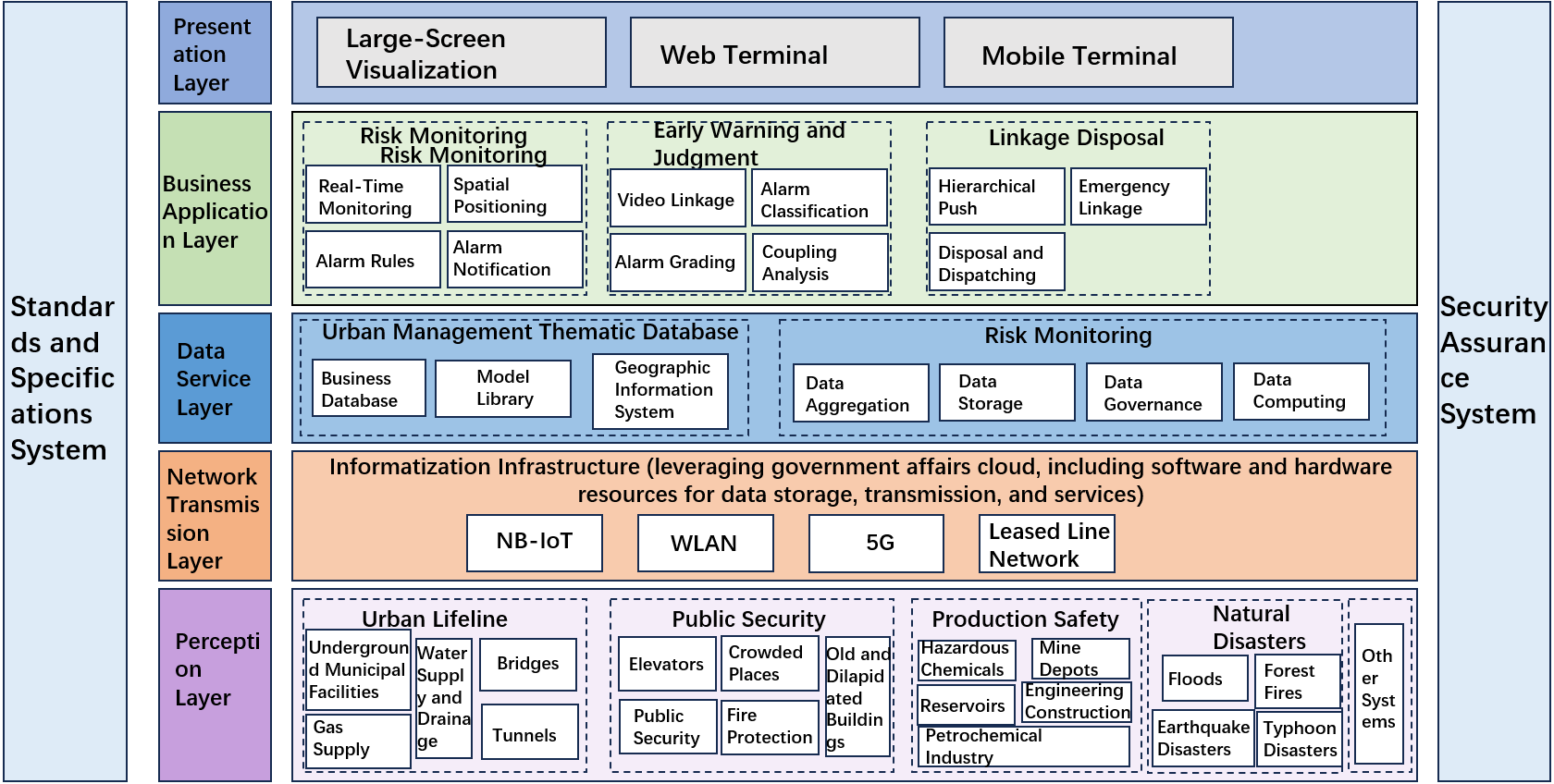
Real-Time Monitoring and Early Warning Capabilities: Continuously monitors various urban safety risks (e.g., natural disasters, traffic accidents, industrial accidents) and issues timely early warnings. It aims to facilitate necessary preventive measures prior to disaster occurrence, minimize losses to the greatest extent, and safeguard people's lives and property safety.
Data Analysis and Decision Support: The platform collects a large volume of urban data for in-depth analysis and mining, providing a scientific basis for decision-making by government departments and enterprises. For instance, data analysis enables the identification of potential urban safety hazards and the formulation of targeted improvement measures, thereby enhancing the overall urban safety level.
Resource Scheduling Optimization: In response to emergencies, the platform supports customers in achieving rapid resource scheduling and coordination (e.g., police deployment, rescue team dispatch), effectively improving the efficiency and effectiveness of emergency response.
Enhanced Urban Governance Efficiency: Through the monitoring and early warning platform, government departments can conduct urban governance and administration with greater precision, upgrade public service quality, strengthen citizens' sense of safety and well-being, and further promote the sustainable development of the city.